
“Office in the Forest”
The “Office in the Forest” that aims to coexist with nature
Japan’s first Zero-Energy Building, achieved a record-high CASBEE score
In a world of increasing global warming and environmental destruction, Seicho-No-Ie (SNI) became the first religious group in the world to obtain ISO 14001 certification in 2001, based on the SNI teaching that we should “be grateful to everything in the universe,” and embarked on its journey towards reducing the environmental burden of its activities.
But the progression of global warming is outpacing societal changes, separating human beings from nature, which are inherently one. Staying dependent on an urban lifestyle – heavily reliant on the mass consumption of resources and energy – would limit the sustainable paths that could be explored.
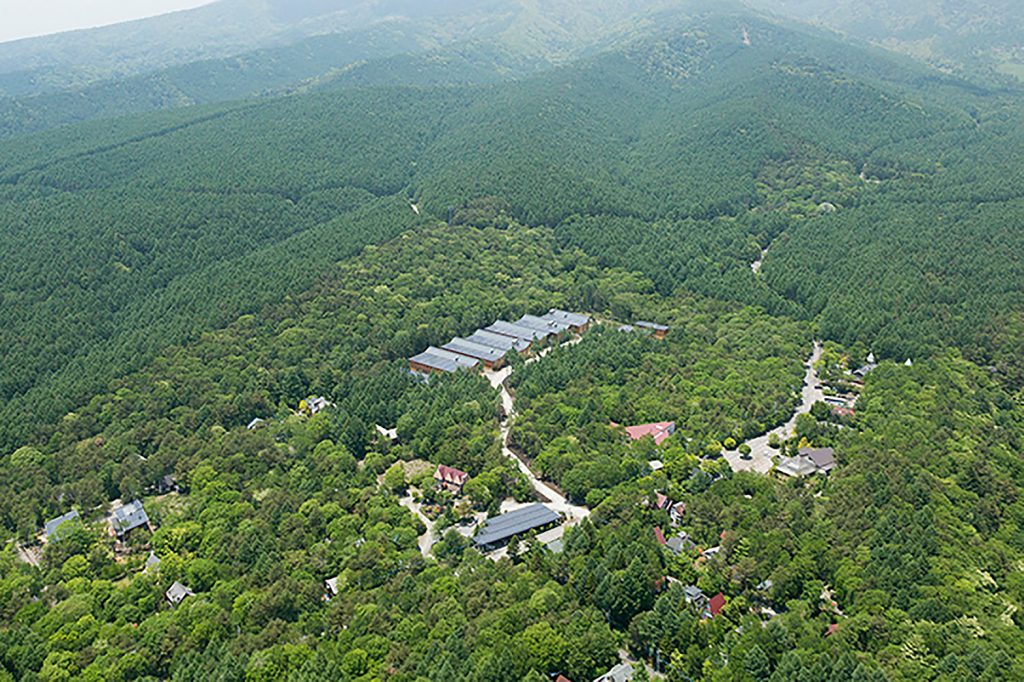
In 2003 Seicho-No-Ie announced its concept of a groundbreaking vision of the “Office in the Forest,” aiming for the harmony between people and nature. This vision was to move SNI’s International Headquarters to the forest and continue performing its duties to make the coexistence between forests and people a reality. Then, after a decade, on July 2013, the “Office in the Forest” was finalized on the southern foothills of Mount Yatsugatake, in Hokuto City, Yamanashi Prefecture.
These are the features of the “Office in the Forest.”
1 Attention to the environment that allows us to join nature
2 Achieving a Zero-Energy Building through energy conservation and energy production
3 Achieve the Grand Harmony of God, Nature, and Human Beings alongside the world’s religions
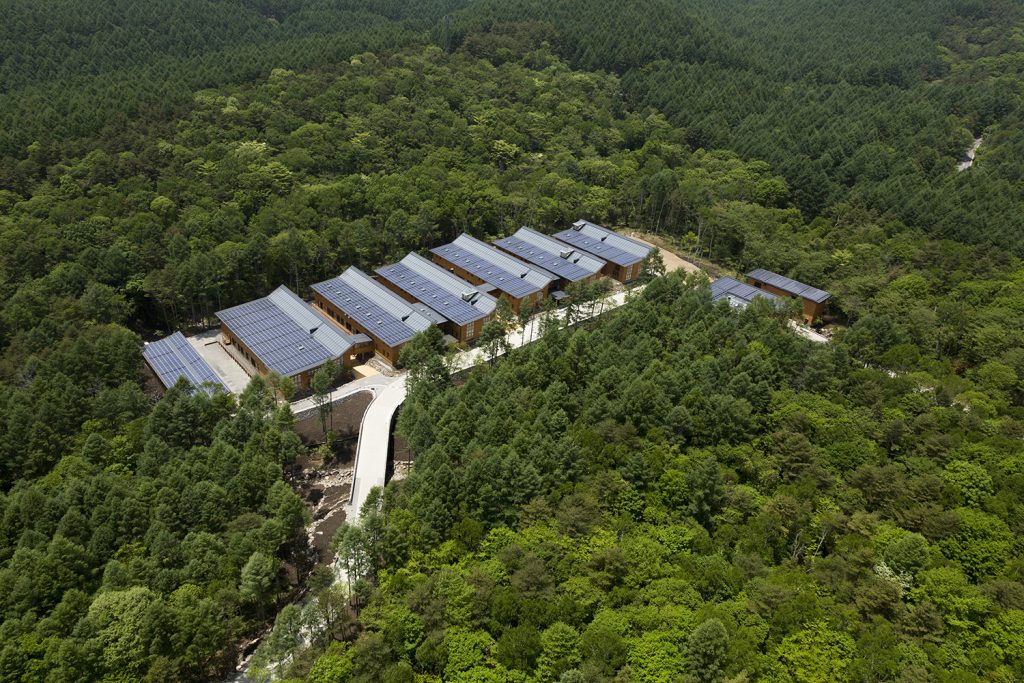
1. Attention to the environment
that allows us to join nature
(1) Construction project and work that minimize their impact on the environment.
During the construction of the office buildings, environmental surveys were conducted and the design and construction were carried out with consideration for the forest ecosystem to minimize the impact on nature. The office was built in an area of planted forest, and efforts were made to preserve the broad-leaved forest as much as possible.
(2)Making the most of nature
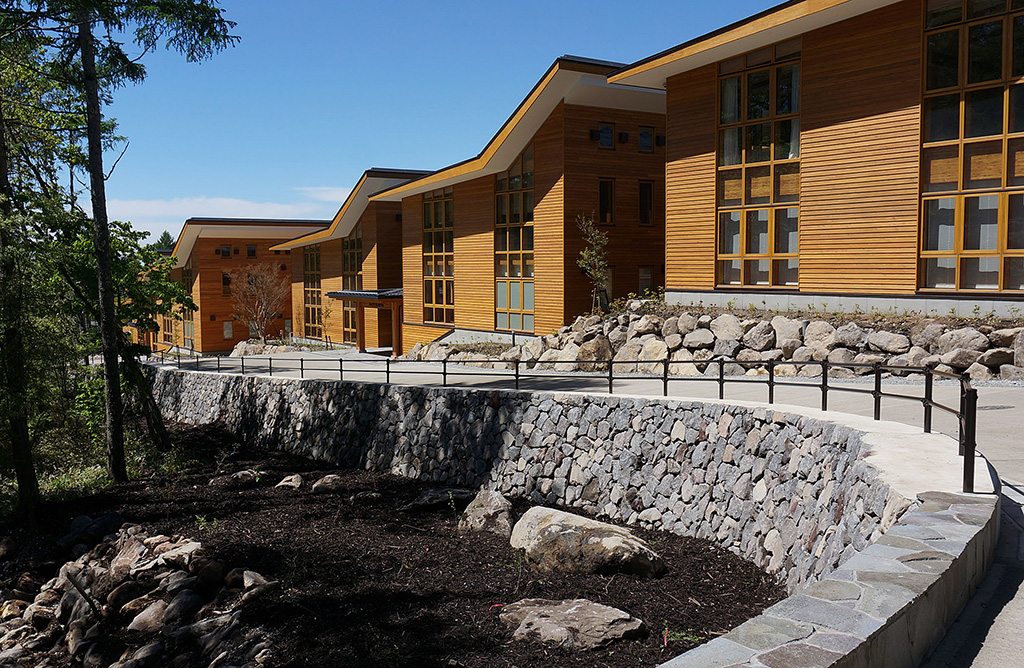
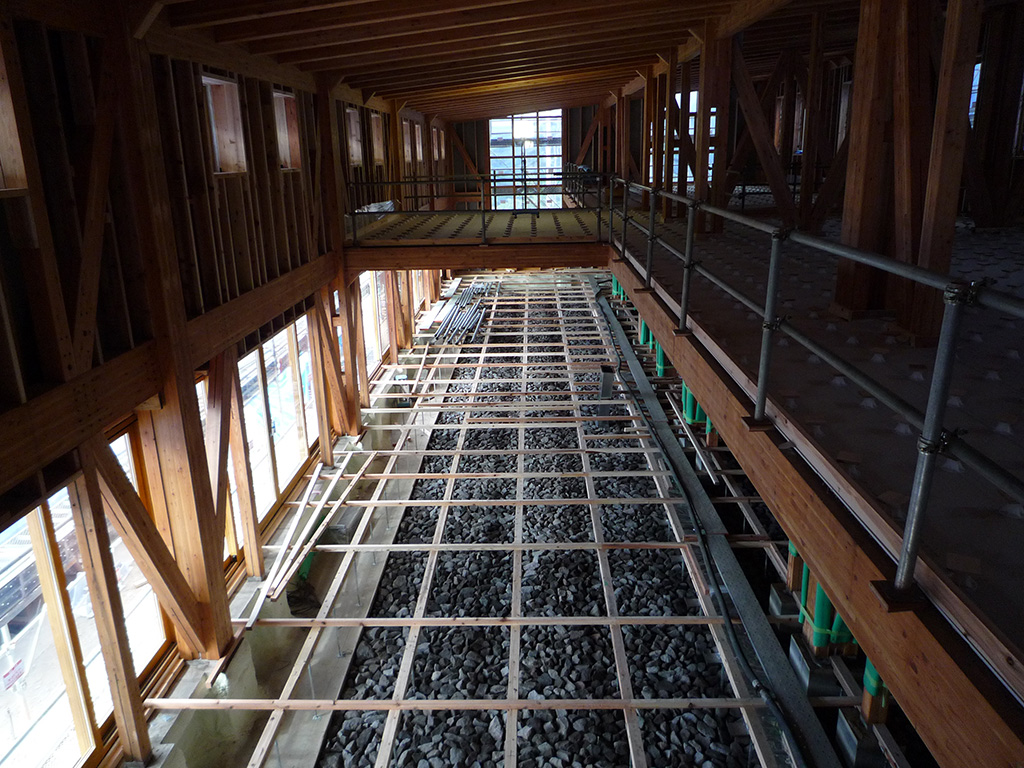
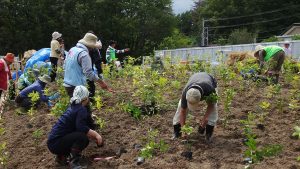
The numerous large rocks unearthed during construction were crushed and used for the site’s perimeter wall (upper left) and as thermal storage material placed beneath the building (upper right). The thermal storage material is heated by heat transferred from solar thermal collector panels. Additionally, over 1,000 saplings (such as maple and oak) were collected from the construction site before development began (lower right). These were cultivated in a nursery and then replanted on the site after construction was complete.
(3) Conservation of water resources and prevention of soil contamination from wastewater.
The toilets in the office are flushed with recycled water in the form of treated wastewater, and the sewage treatment system employs advanced treatment methods to conserve water resources and prevent soil contamination.
2. Achieving zero-energy buildings
through energy conservation and energy production
The “Office in the Forest” is based on the “zero carbon” movement promoted by Seicho-No-Ie, and aims to achieve net-zero energy consumption in the office’s operation. To reach such goal, nature’s power and cutting-edge environmental technologies were applied for both energy conservation and energy production. Compared to a conventional building of the same size, the “Office in the Forest” uses about 45% less energy. The remaining 55% is produced locally, effectively achieving net-zero energy consumption. Furthermore, an off-grid system was installed in 2020.
One of Japan’s largest wooden building projects
About 90% of the material used is FSC certified
Why the “Office in the Forest” was built with wood:
- Reduce CO2 emissions not only during construction, but also when disposing wood not suited as construction material.
- Desire to use local forest resources in a sustainable way.
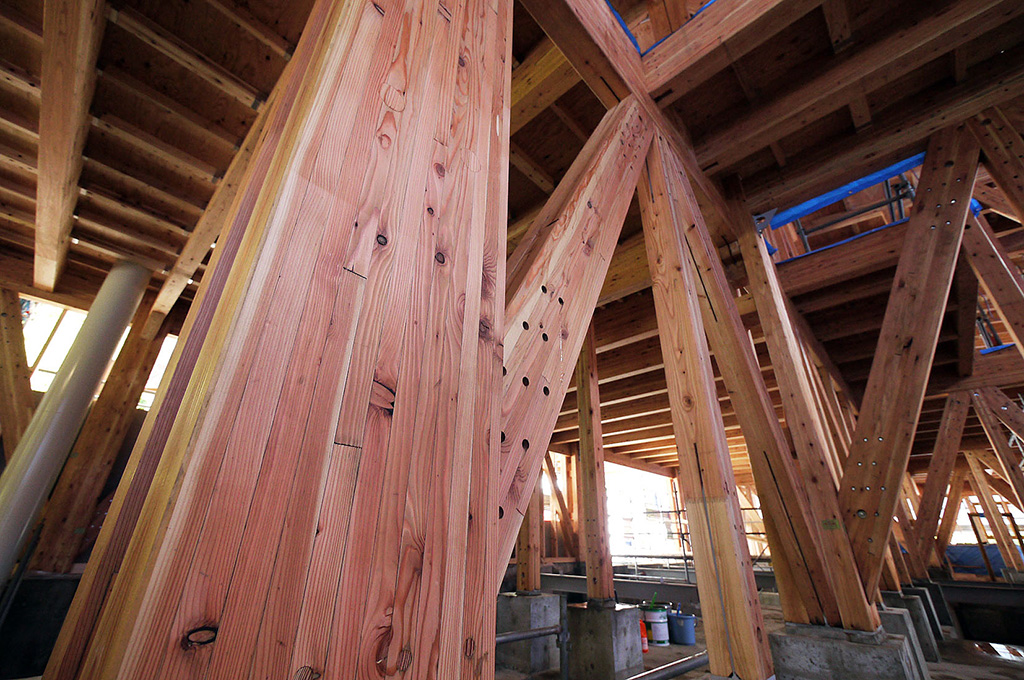
1) Has 1.25 times the resistance against earthquakes required by the Building Standards Act
The “Office in the Forest” is a two-stories tall wooden building and it is Japan’s largest wooden building in area. While the amount of material used was reduced thanks to its efficient structure, it still has 1.25 times the resistance against earthquakes required by the Building Standards Act.
2) Used 90% of wood grown in Yamanashi and FSC certified
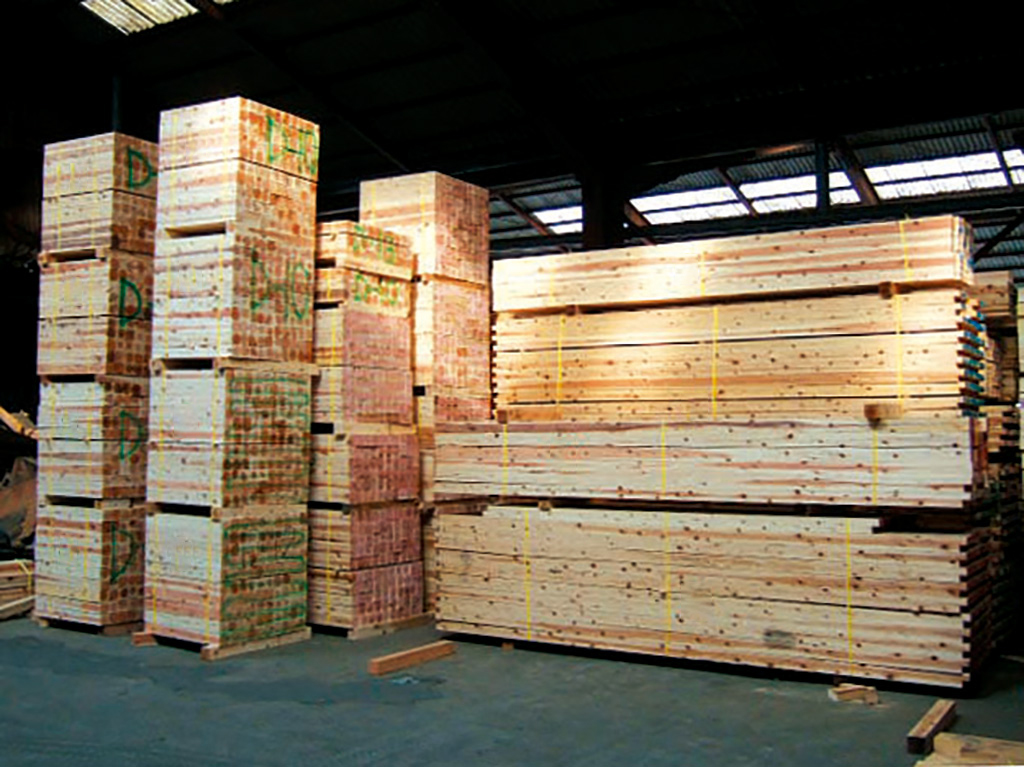
About 90% of the wood used in the “Office in the Forest” is FSC-certified wood extracted from within Yamanashi Prefecture. In August 2013, the “Office in the Forest” received the “Full FSC Project Certification.”
3) Contributing to the area by using local materials
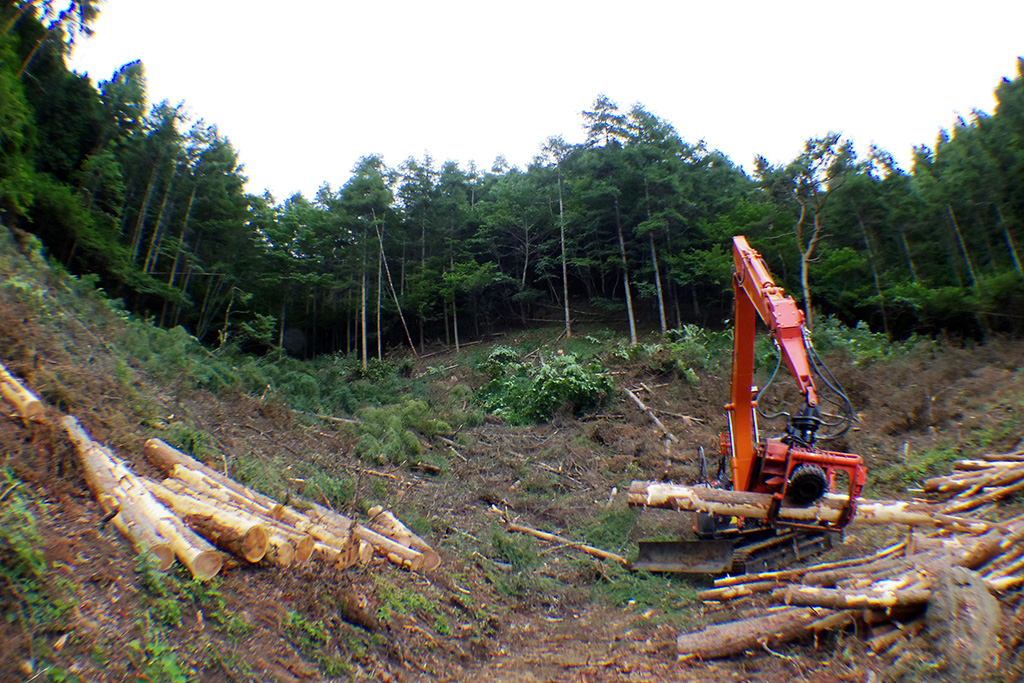
Of the 158,000 hectares of forests owned by the Yamanashi prefecture, 143,000 are FSC certified, which attests to their environmental friendliness and appropriate forest management. By using this wood, SNI made an environmentally conscious choice in revitalizing Yamanashi’s forests, and contributing to the local economy by practicing local production for local consumption.
Energy conservation and energy production
1) Reducing energy consumption by harnessing the power of nature
To conserve energy, the building makes use of various sources of natural energy, such as wind, generated by the cool climate of 1,300m of altitude, and natural light and heat from the prominent sunlight that bathes the city.
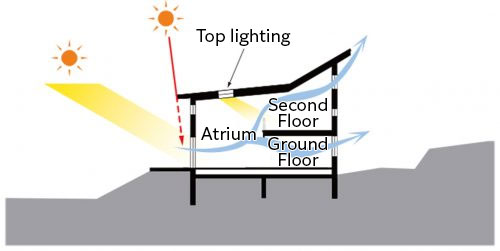
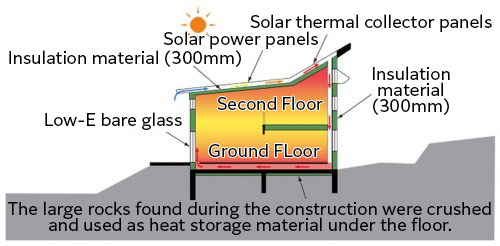
WIND
Leaving openings at the corners of adjacent buildings and utilizing natural ventilation through differences in elevation makes air conditioning unnecessary during the summer.
SOLAR LIGHTING
The use of artificial lighting is reduced through natural lighting provided by skylights and large windows.
ILLUMINATION
The adoption of LED lighting throughout the building reduced power consumption.
INSULATION
The buildings feature a high-insulation design with 300mm of insulation in the roofs and walls, and high-performance Low-E double-glazed windows with wooden frames.
SOLAR HEATING
The roof solar thermal system heats the air, which is then used for underfloor heating.
HEAT STORAGE
Fieldstones are used under the floor to enhance the heating effect.
2) Use of solar power and biomass power
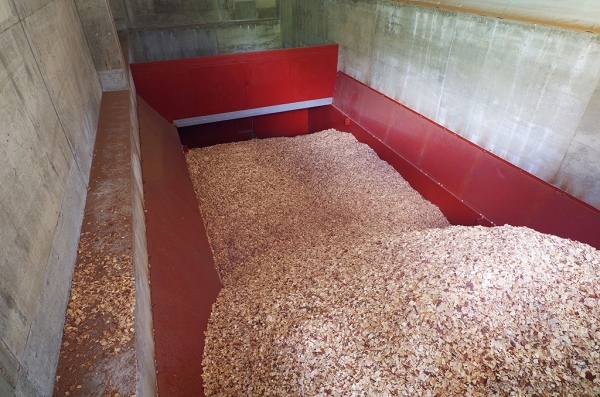
To produce energy, solar panels and biomass generators (using locally produced woody fuel) were used. Renewable energy sources such as solar power fluctuate depending on the season and natural conditions. Therefore, in the “Office in the Forest”, electricity is supplied through a small-scale power network called a “microgrid,” that appropriately controls power generation from solar and biomass sources, as well as battery storage.
ENERGY GENERATION (Creating 55% of the energy)
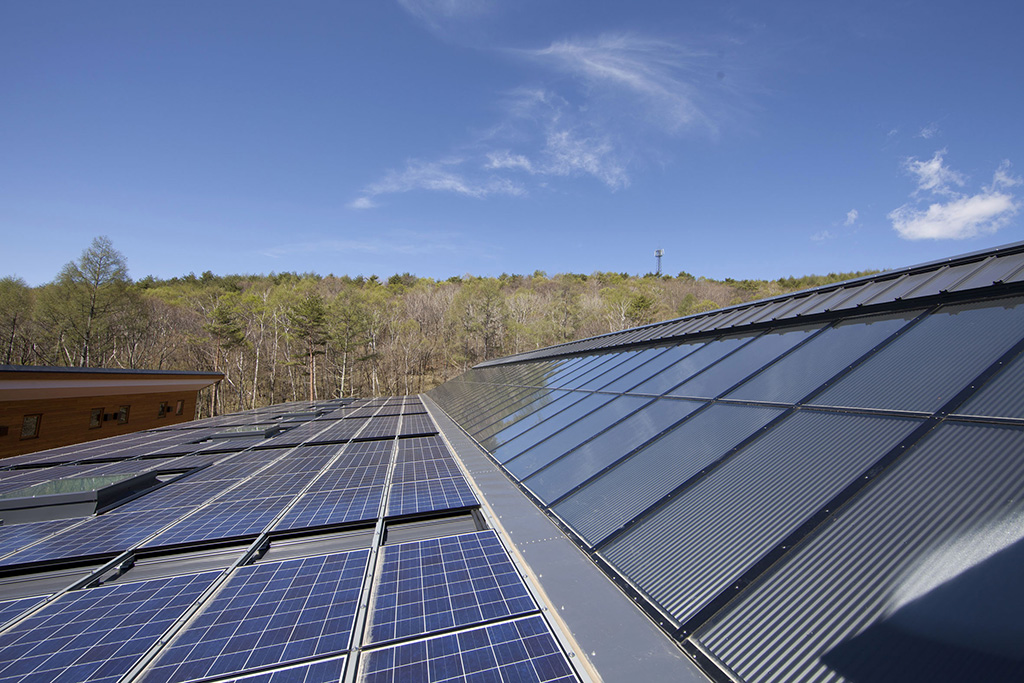
High efficiency power generation panels (470kW)
Solar panels/Solar thermal collector panels
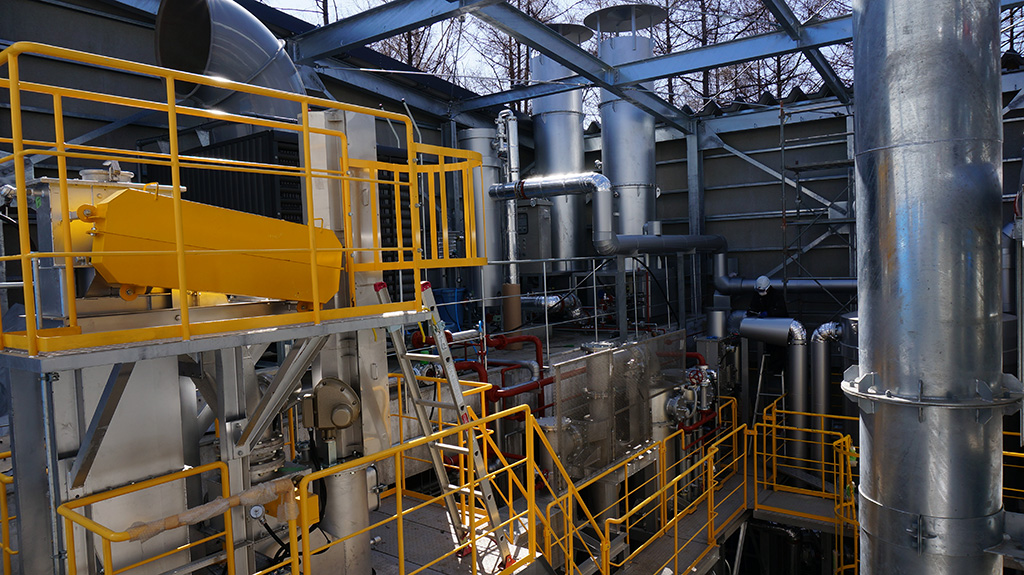
Woody biomass generation (175kW)
Woody biomass power generation equipment
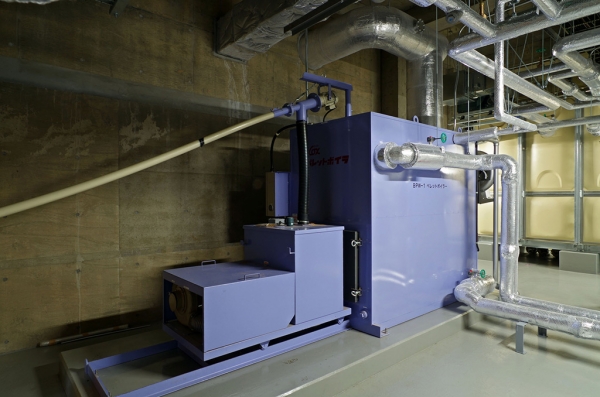
Wood pellet boiler
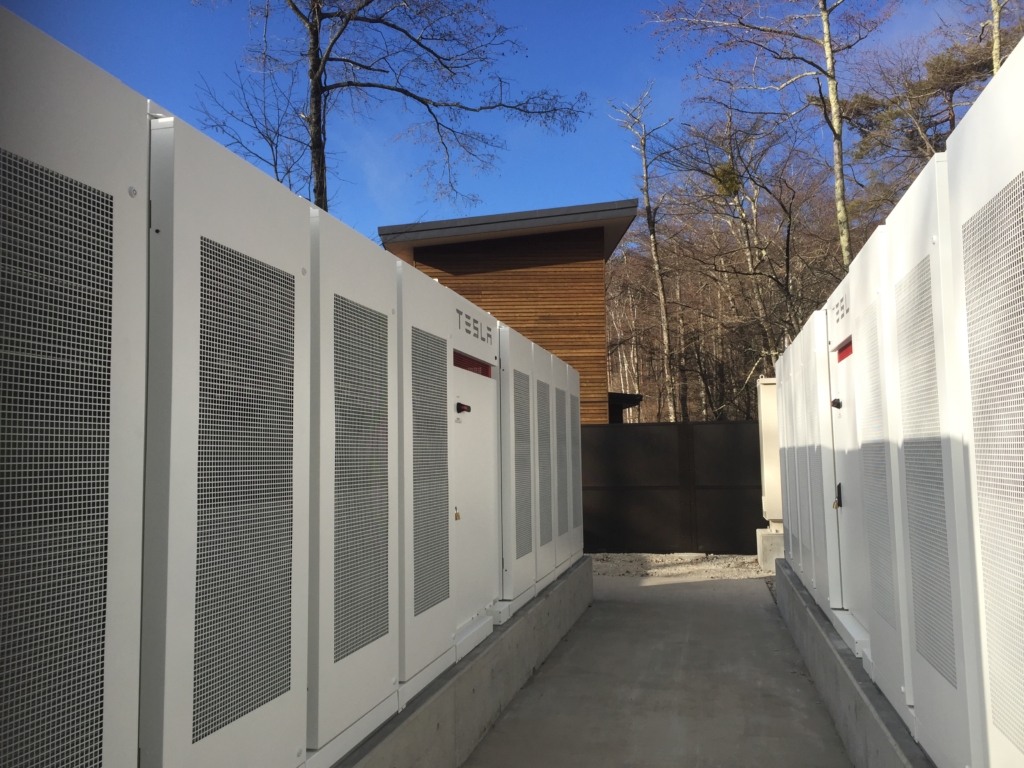
3) Off-grid operation was made possible by increasing lithium-ion battery
Initially, the plan for the “Office in the Forest ” involved electricity trading, resulting in a carbon-neutral annual energy balance.
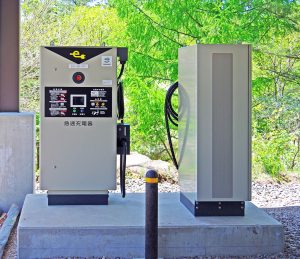
However, the Fukushima Daiichi nuclear power plant incident following the 2011 Great East Japan Earthquake became a lesson from which we added the goal of phasing out nuclear power and aimed to eliminating reliance on power companies as much as possible and to supply 100% of our office’s electricity from renewable energy sources. Finally, in March 2020, we upgraded our battery system from 408kWh to 3648Wh, establishing a self-sufficient system powered solely by existing solar energy (470kW) and biomass (175kW). As a result, we disconnected our office’s power system from the commercial power grid (implementing an off-grid system). The natural energy generated on-site now powers the office building and electric vehicles (including three electric buses and numerous passenger cars), and also supplies power to a public fast charger for electric vehicles.
Cafeteria
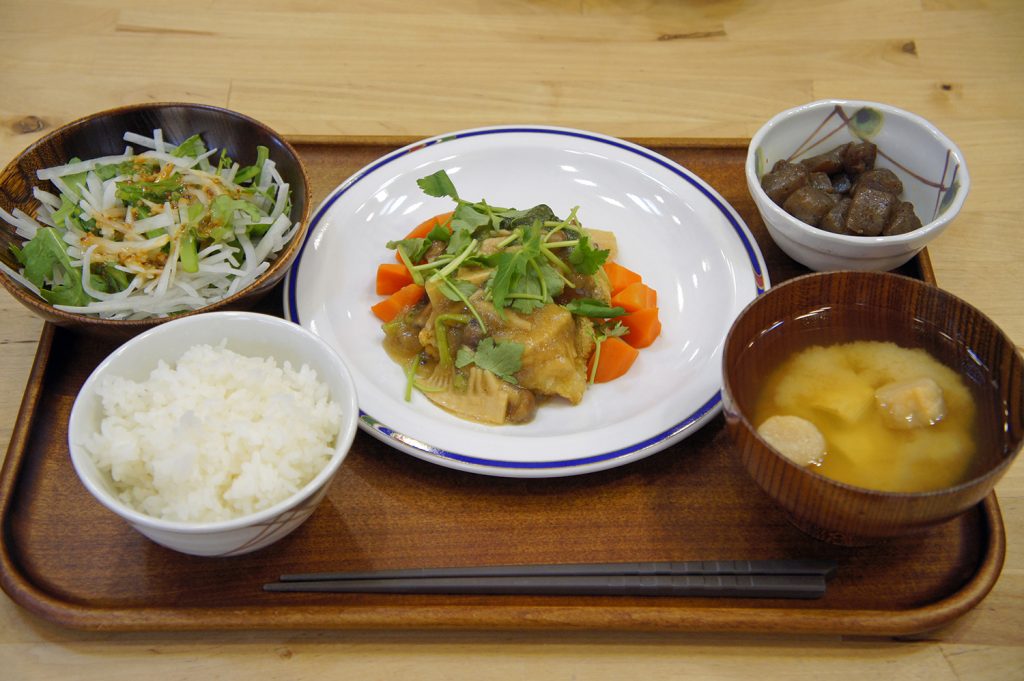
Based on the religious principle that “God, nature, and human beings are fundamentally one,” we strive to provide daily meals that are mindful of the global environment, delicious, and health-conscious.
1) No-meat dishes
The dishes provided do not use any meat so are “no-meat dishes.” This is to reduce the environmental impact of meat consumption, such as carbon dioxide emissions and deforestation. The cafeteria staff devises creative ways to prepare and cook the food, offering a wide variety of dishes from Japanese, Western, and Chinese cuisine, with a different menu for each meal.
2) Locally produced seasonal ingredients.
Our food sourcing prioritizes obtaining reliable organic ingredients from local sources whenever possible. This approach helps reduce the environmental impact of food production methods and minimize carbon dioxide emissions from transportation.
Furthermore, from the same perspective, we use ingredients that are in season. We also use organic vegetables grown in our own fields and wild vegetables foraged in the Office grounds.
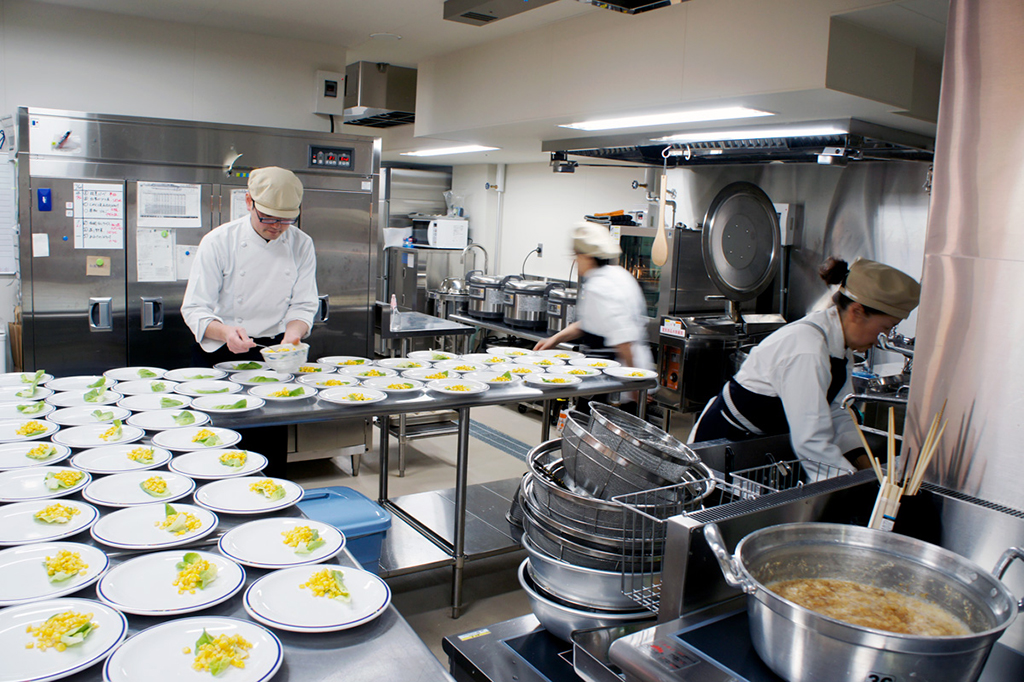
3) All electric
In terms of resource utilization, we use renewable energy from the sun and biomass for cooking. Therefore, all the appliances in the kitchen are electric.
Furthermore, as part of our commitment to recycling, part of our tableware is wooden tableware coated with a natural lacquer.
Regarding waste management, we separate and recycle recyclable waste. Organic waste is broken down using equipment utilizing microorganisms, ultimately producing carbon dioxide and water, thus reducing carbon dioxide emissions when compared to incinerating general waste. We also recycle used cooking oil into biodiesel fuel which is used to generate a part of the biomass power of the office. Additionally, the detergents used in the cafeteria are environmentally friendly and designed to minimize impact on the environment.
4) Community service activities
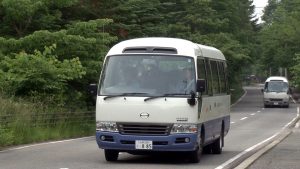
The city of Hokuto, where the Office in the Forest is located, has the motto “An environmentally creative city where people, nature and culture thrive.” We communicate with local residents in line with the city’s spirit and actively participate in local environmental conservation activities. We not only generate electricity at the Office in the Forest (including the Media Center) with a 530kW solar power generating system but have also introduced electric micro buses (3) and electric cars for staff commuting, significantly reducing CO2 emissions. We also have quick chargers available free of charge, contributing to the creation of a low-carbon local community.
3. To realize Grand Harmony of
God-Nature-Human Beings
in cooperation with all religions.
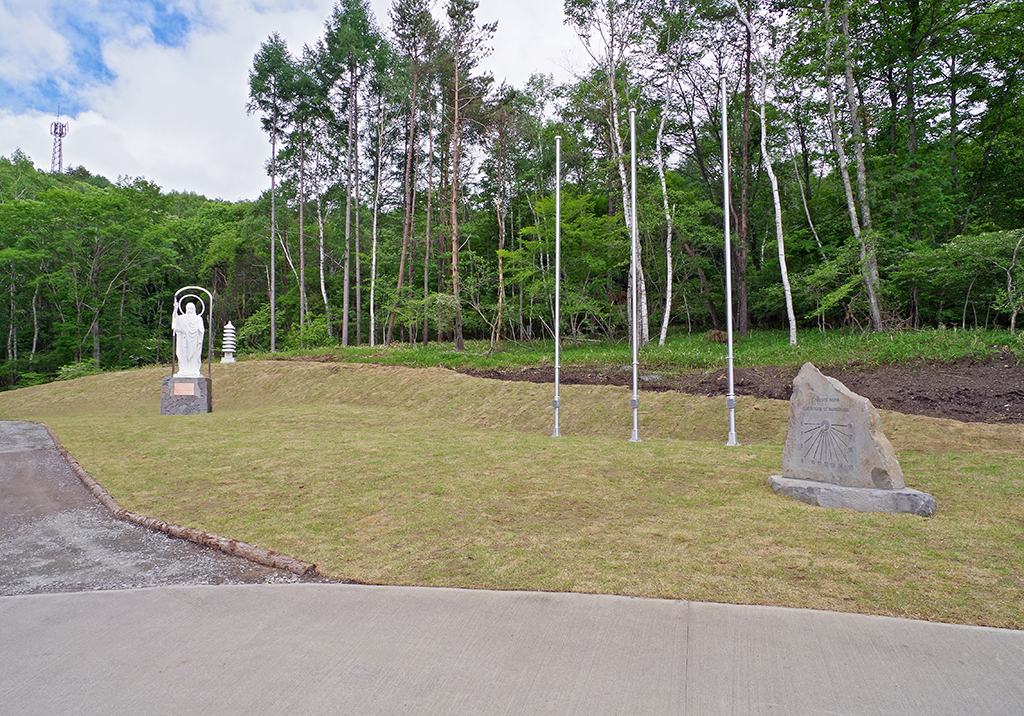
The Square of Embracing All Religions
Since its founding in 1930, SNI has disseminated its teachings with the doctrine “all religions emanate from one Universal God,” which means that the core of all religions teaches the same Truth, as an important pillar of propagation. With that as the base, the Square of Embracing All Religions was created as a place for each religion to vow to move forward in mutual cooperation towards the realization of the Grand Harmony of God-Nature-Human Beings while recognizing the respect for, and honor of, nature, which is God’s creation and the “manifestation” of Buddha, that is shared among the world’s religions.
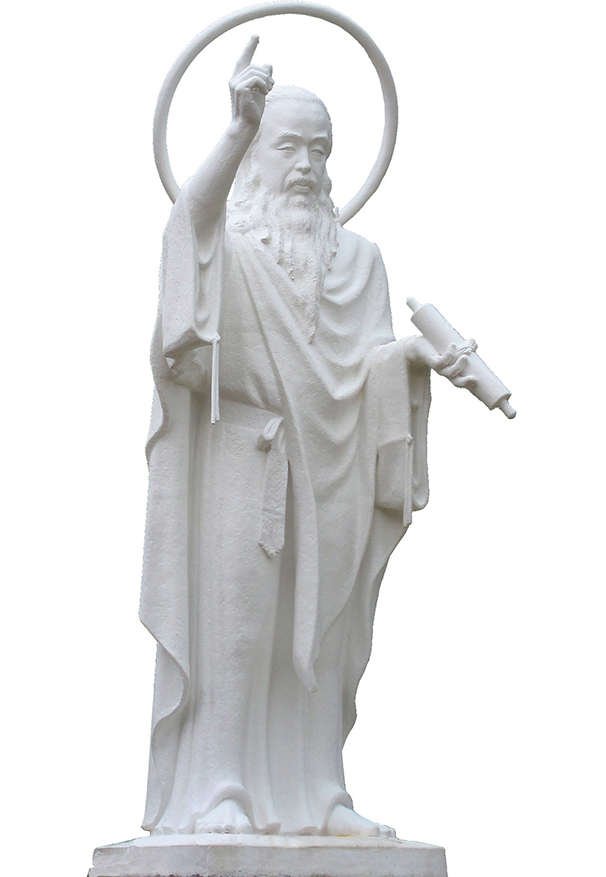
The Statue
The statue is a work of art created as a representation of the “Lighter of the Seven Golden Candlesticks,” the one who, as written in the Book of Revelation, Chapter two, of the Bible, “walketh in the midst of the seven golden candlesticks.” Because the statue signifies the role of lighting the lamps for the “seven churches,” or the world’s religions, it was erected as a symbol of the unity of all religions.
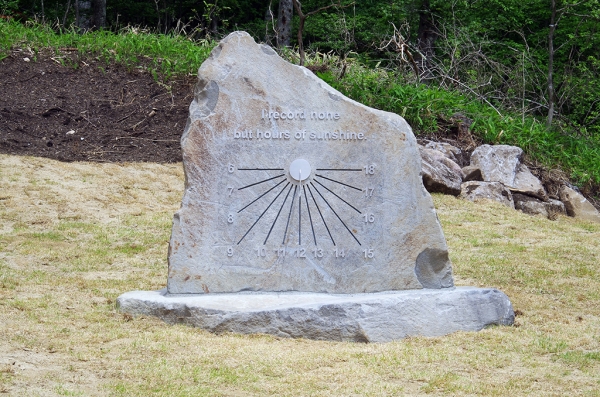
Sundial (wall type)
In Seicho-No-Ie, we call recognizing only the bright side of life, just as a sundial records only the time when the sun shines on the wall, the “Sundial Principle.” We encourage a lifestyle in which people actually write down their joys in a “Sundial Diary.” This sundial was erected as a symbol of a movement to broadly apply the Sundial Way of Life to the home, the workplace, community, and even relationships between countries.
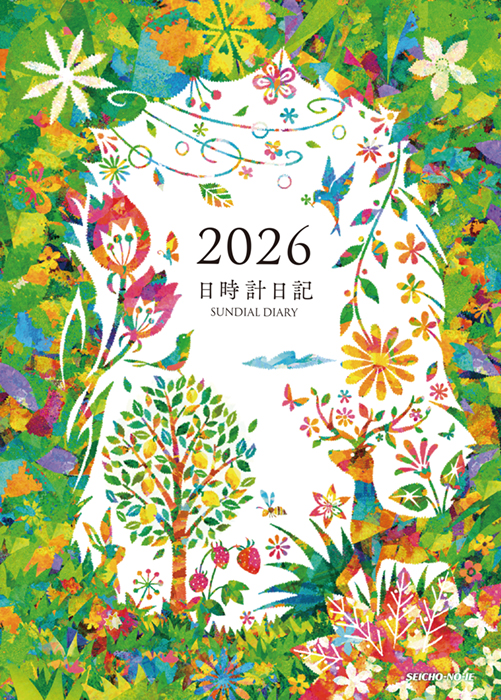
“Sundial Diary” 2026
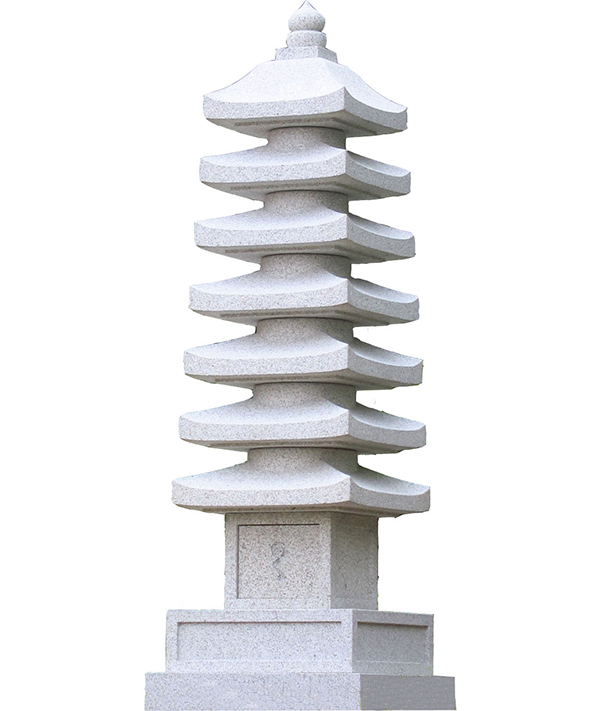
The Seven-Story Pagoda
The Seven-Story Pagoda represents the Seven Treasures Tower that appears in the “Emergence of the Treasure Tower”, Chapter of the Lotus Sutra. This is derived from the story of the enormous pagoda made of seven treasures, with the “Many-Treasured Buddha” (Sanskrit: Prabhutaratna; Japanese: Tahounyourai) inside, emerging from the ground as Shakyamuni is teaching. In praise of Shakyamuni and his teaching, Many Treasures Buddha shares half of his seat with him. The Seven-Story Pagoda stands 2.5 meters tall with a vertical iron core that runs through the center connecting the seven stories – the number seven represents “everything” and “completion” – representing the founding mission and Seicho-No-Ie’s goals of the Movement as follows:
- All Religions Emanate from One Universal God (Seven Religions)
It represents the world’s religions in Grand Harmony, while keeping their diversity, centered on the “principle of the salvation common to all humankind”. - Symbol of International Peace (Seven Continents)
It represents the world’s nations in Grand Harmony, while keeping their diversity, centered on God’s will. - Harmony among Diverse Ethnic Groups (Seven Ethnic Groups)
It represents the harmony of the diverse peoples of humanity. - Harmony of Diverse Cultures (Seven Cultures)
It represents the diverse cultures of the world coexisting and prospering together in harmony. - Harmony between Generations (Seven Generations)
It represents the upholding of inter-generational ethics and the Seicho-No-Ie teachings being passed down forever. - Harmony among Living Beings (Seven Lives)
A symbol of the Grand Harmony of all living things on earth where diverse species thrive. - Harmony and Expansion among Missionary Bases and Organizations (Seven Missionary Bases)
It represents a world where Seicho-No-Ie is expanding to various missionary bases, in various organizational styles, while centering on God’s will.
Awards and Media Coverage
The Office in the Forest, which utilizes the latest environmental technology and is environmentally friendly, has won various awards in the construction industry, receiving high praise and recognition from environmental organizations. We will introduce the awards and recognition garnered thus far.
August 2013 – FSC (Forest Stewardship Council) Full FSC Project Certification
April 2014 – 23rd Global Environment Award: Ministry of Land, Infrastructure, Transportation and Tourism Award
November 2014 – CASBEE (Comprehensive Assessment System for Built Environment Efficiency) “Existing Buildings” Category S-Rank
November 2014 – 2014 Yamanashi Prefecture Award: Architectural Culture Encouragement Award
May 2015 – 3rd Carbon Neutrality Award: Carbon Neutrality Grand Prize
May 2015 – 13th Environmental and Facilities Design Award, Environmental Design Award: Environmental Design category, “Excellence Award”.
May 2016 – 30th Society of Heating, Air Conditioning, and Sanitation Engineers of Japan, Promotion Award, Technology Promotion Award
June 2016 – 27th Institution of Electrical Installation Engineers of Japan, Encouragement Award Design Category
November 2018 – Green Printing (GP), Environmental Award
3rd Carbon Neutrality Award: Carbon Neutrality Grand Prize
Organizer: Building Mechanical and Electrical Engineers Association
Award Date: May 12, 2015
Award Ceremony: June 24, 2015
The Award aims to contribute to the realization of a low-carbon society by recognizing and evaluating the efforts and innovations in building facilities that contribute to carbon neutrality and reduces CO2 emissions from buildings to near zero (1. Energy-conservation efforts and methods, 2. Conversion to low carbon energy, 3. Use and innovation of renewable energy, 4. Carbon credits, etc.). Twenty-one applications were submitted from across the country for the third annual award, with the Office in the Forest being awarded the Grand Prize. Executive Committee Chairman Tatsuo Nobe (Vice Chairman of the Association) presented the award saying, “It has achieved Japan’s first negative energy building and is a perfect example for the Carbon Neutrality Award. Taking advantage of the site’s potential, the ingenuity and efforts in conserving and creating energy, and the performance verification efforts are also worthy of recognition.”
Evaluation
CASBEE (Comprehensive Assessment System for Built Environment Efficiency) “Existing Buildings” Category S-Rank
Issue date: November 6, 2014
The system established in 2001 under the auspices of the Ministry of Land, Infrastructure, Transport and Tourism, is a method for evaluating and rating the environmental performance of buildings. It is highly recognized in the field of environmental architecture. It comprehensively evaluates the degree to which environmental burdens are reduced, including indoor comfort, the building’s environmental quality, use of natural energy, and consideration for the surrounding environment. It is divided into categories such as “New Construction” which evaluates buildings at the design stage, “Existing Construction” which evaluates buildings after at least one year of operation, and “Renovation” which evaluates renovation designs. The “Existing Construction” category for which the Office in the Forest was awarded the prize this time is highly challenging as it is based on actual operational performance. The Office was given a Building Environmental Efficiency (BEE) rating of 7.2, the highest rating ever at the time, surpassing the previous highest score of 7.0 (a research installation by a major construction company).
FSC (Forest Stewardship Council) Full FSC Project Certification
Acquisition Date: August 21, 2013
FSC is an international forest management council that certifies forest management, wood processing and distribution, but the “Full FSC Project Certification” is a system that certifies the entire project (buildings, civil engineering structures, event stages, etc.) that is being constructed or manufactured. The Office in the Forest is the first wooden building in Japan to receive this certification. To obtain the certification, more than 50% of the materials used must be FSC-certified. Of the 2500 cubic meters of material used in the Office, approximately 90% is FSC-certified, cut from forests in Yamanashi Prefecture.
Other Awards
23rd Global Environment Award: Ministry of Land, Infrastructure, Transportation and Tourism Award
Sponsor: Fuji Sankei Group
Award Ceremony: April 10, 2014
This award recognizes companies and organizations contributing to the prevention of global warming and the realization of a recycling-oriented society. The Shimizu Corporation received this award for having built the Office in the Forest, a ZEB that uses 90% of wood from within the Yamanashi Prefecture and recipient of the Full FSC Project Certification. In June of the same year, the building was featured in Fuji TV’s program “Global Environment Award 2014 ~Saving the Future from the Looming Crisis~” as one of the eight award-winning companies. The building’s energy-efficient design and its use of natural energy sources were presented when the “Office in the Forest” was awarded the title “Japan’s first Zero Energy Building.”
2014 Yamanashi Prefecture Award: Architectural Culture Encouragement Award
Organizer: Yamanashi Prefectural Culture Award Recommendation Council, Yamanashi Prefecture and others
Award Ceremony: November 7, 2014
With the aim of elevating architectural culture and promoting comfortable urban development, this award recognizes outstanding buildings within Yamanashi Prefecture. Last year, out of 69 entries, two received the Architecture Culture Award, and six received the Architecture Culture Encouragement Award, which is equivalent to second place.
The Office in the Forest was praised for having incorporated energy conservation and energy generation into large scale buildings.
13th Environmental and Facilities Design Award, Environmental Design Award, Environmental Design category, “Excellence Award”.
Organizer: General Incorporated Association Building Equipment Association
Award Ceremony: May 20, 2015
Buildings and facilities are evaluated along four axes: sensibility, functionality, economy, and social. In the Environmental Design category, evaluation is based on factors such as the use of natural energy and resources being suited to the region and harmony between the building and the landscape. The Office’s use of natural light, natural ventilation, and the use of local materials were the deciding factors in the evaluation.
Office in the Forest featured in an architectural magazine
January 2009 issue of “Shin Kenchiku” (published by Shin Kenchiku);
September 2010 issue of “Shin Kenchiku” (published by Shin Kenchiku);
“New Architecture Magazine special edition Works collection” 2015 (published by the Architectural Institute of Japan);
and others.
History leading to the “Office in the Forest”
| 1930 | March 1: Masaharu Taniguchi (Founder) founds Seicho-No-Ie with the publication of the first issue of the Seicho-No-Ie magazine in Kobe City, Hyogo. |
| 1934 | The Headquarters is moved to Tokyo and missionary activities carried out from there. |
| 1954 | New Headquarters Hall is established in Harajuku, Tokyo. |
| 1960 | Seicho-No-Ie Uji Temple-Hozo Shrine is built in the mountains of Uji City, Kyoto Prefecture. |
| 1978 | Seicho-No-Ie Main Temple, Ryugu Sumiyoshi Main Shrine is built in the mountains of Saikai City, Nagasaki Prefecture. The installation of a wind power generator is considered but a large solar water heater is installed instead. |
| 1990 | Recycled paper is introduced for the majority of the paper used at the headquarters. |
| 1999 | May: “Personal Thoughts” (provisional translation) by Masanobu Taniguchi is published. Adoption of solar power generation is encouraged in the chapter “Sunshine, Not Oil” (provisional translation). |
| 2000 | Acquisition of ISO 14001 certification is announced in the Movement Policy. October: Announcement of the Seicho-No-Ie Environmental Policy. |
| 2001 | A 160kW solar power generation system replacing the solar hot water system (jointly with NEDO) at the Main Temple is installed. Installation of this system for domestic and overseas offices and members is promoted. Fundraising for reforestations worldwide (now renamed the “Green Fundraising”) begins. July: ISO 14001 Certification is received at Headquarters and the Main Temple (The first religious organization in Japan to do so). |
| 2002 | “Let’s Learn From Nature – Beyond Anthropocentrism” (provisional translation) by Masanobu Taniguchi is published. |
| 2003 | The plan for building the “Office in the Forest” is announced in the Movement Policy and the project begins. Efforts to power all Public Lecture venues nationwide with green electricity begins. |
| 2004 | April: “The Most Important Things” (provisional translation) by Seicho Taniguchi is published. The basic concept of the “Office in the Forest” is determined. |
| 2006 | Publication of “Solar Power Plant on Paper” in the Seishimei magazine for members showing the combined capacity of solar power generation at offices and the residences of members (6,420.77 kW as of June 2013) begins. |
| 2007 | “Carbon Zero” movement (a movement to reduce carbon dioxide emissions of organizational activities as much as possible and achieve virtually zero emissions through natural energy, reforestation, etc.) is launched. Subsidies for purchasing solar power generators and small-scale wind power generators for Seicho-No-Ie members begin being offered. ISO14001 certification for all 66 locations nationwide (including two related organizations) is attained. Selection criteria for potential relocation areas for the “Office in the Forest” is set. Land surveys started, eventually surveying about 90 locations. |
| 2009 | Brazil Missionary Headquarters attained ISO14001 certification, followed by the U.S. Missionary Headquarters in 2010, and Republic of China in 2011. A concrete plan (mid to long-term vision) for the “Office in the Forest” is decided. |
| 2010 | January: Building plot in Oizumi-Cho, Hokuto City, Yamanashi prefecture, is acquired. April: Subsidies for purchasing electric car purchases for Seicho-No-Ie members begin being offered. Publication of articles in SNI’s monthly magazine summarizing its tree planting and afforestation activities begins. October: “We Will Move to the Forest – Seicho-No-Ie’s Ideas Regarding Harmony Between People and Nature” (provisional translation) by Masanobu Taniguchi and Junko Taniguchi is published. Basic design of the “Office in the Forest” is decided, combining state-of-the-art environmental technologies in an effort to achieve zero energy balance (carbon zero). |
| 2011 | 5 electric vehicles (Nissan Leaf, Mitsubishi i-MiEV) for the Headquarters are acquired (a total of 43 vehicles has been acquired for all locations and members as of June 2013). January 19th: Purification ceremony for the “Office in the Forest” (plot clearing work) is performed. March 11th: Due to the Great East Japan Earthquake and the Fukushima Daiichi nuclear disaster, the energy plan, which assumed a level of electricity trading with a power company, is reviewed and changed to attain power self-sufficiency. The purchase of high-capacity batteries (400kW) is decided. August 7th: President Masanobu Taniguchi clarifies his support for abandoning nuclear power generation at a lecture in London. |
| 2012 | March: “Decision For Future Generations – Why a Person of Religion Chose To Abandon Nuclear Energy” (provisional translation), by Masanobu Taniguchi is published. April 11th: Purification ceremony for the “Office in the Forest” (construction work) is performed. July 11th: Ridgepole-raising ceremony is performed. |
| 2013 | End of May: “Office in the Forest” is completed. June: The Statue is reallocated from the Tokyo Headquarters to The Square of Embracing All Religions. The Seven-Story Pagoda and the Sundial are installed. July 7th: Celebration of the completion of the “Office in the Forest” with the Ceremony of Embracing All Religions is performed. October 1st: Seicho-No-Ie International Headquarters, “Office in the Forest”, is inaugurated as Japan’s first ZEB. |